Putting on socks can become surprisingly difficult with limited flexibility, balance concerns, arthritis, pregnancy, or recovery from surgery. The right sock aid can reduce bending and help make a daily dressing task more manageable.
We’ve selected 10 sock aids under $50, including basic stocking sliders, wide designs, adjustable models, compression-sock helpers, and kits with shoe horns or sock removers.
Best 10 Sock Aids Under 50 Picks for 2026
Flexible Everyday Pick

- Flexible shell for easier sock loading
- Foam handles and slip-resistant pad
- Adjustable 38-inch ropes
Best For: Regular socks and foot widths up to 5 inches
Comfort-Grip Choice

- Latex-free contoured shell
- 3 cm padded foam handles
- 33-inch cords with button adjustors
Best For: Seniors and users recovering from injury or surgery
Wide-Opening Value

- Wide opening for regular socks
- Non-slip pad helps hold socks
- Adjustable 38-inch ropes
Best For: Users with foot widths up to about 4.2 inches
Two-in-One Dressing Aid

- Combines sock aid and shoe horn
- Three-step floor-based setup
- Long handle helps with sock removal
Best For: Users wanting sock and shoe assistance in one tool
Compact Compression Pick

- Steel frame holds compression stockings open
- Foam-coated handles improve grip comfort
- Designed for calves under 16 inches
Best For: Compression-sock users with limited mobility and small to medium calves
Complete Daily-Living Set
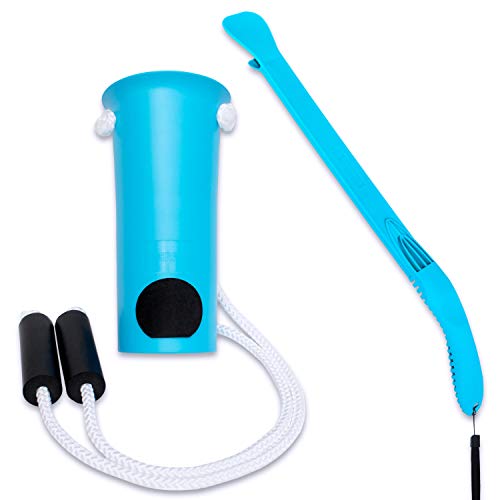
- Includes a sock aid and remover
- Soft flexible shell supports weak hand strength
- For regular socks, not compression socks
Best For: Users needing help both putting on and removing regular socks
Lightweight No-Bend Option
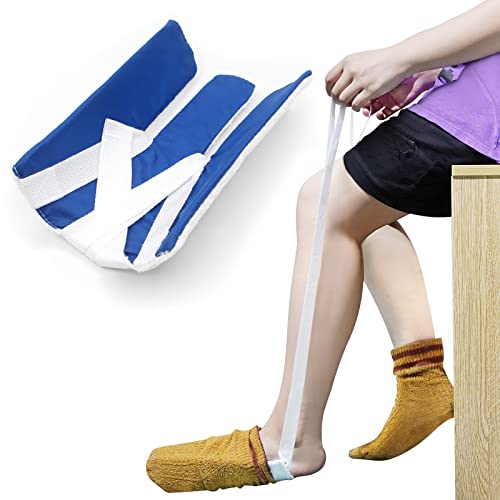
- Helps users put on socks without bending
- Terry cloth grips while nylon reduces friction
- Weighs just 2.4 ounces
Best For: Seniors, pregnant users, and people with limited mobility
Wide-Tube Ease

- 4-inch tube with anti-slip foam
- 33-inch rope helps reduce bending
- Works with many regular socks and stockings
Best For: Seniors and users with limited bending ability
Three-in-One Reach
Easy Sock Ox Adjustable Sock Aid
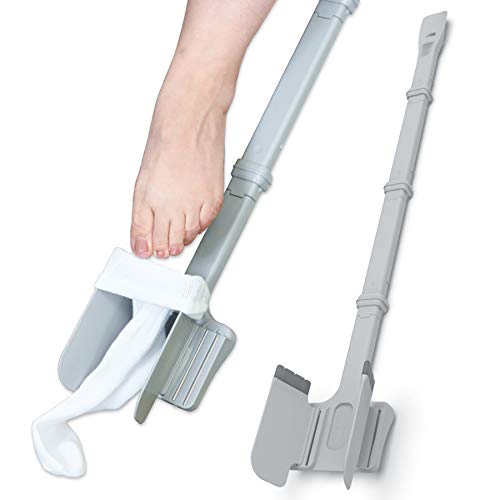
- Sock aid, shoe horn, and remover combined
- Adjustable width and three length options
- Open cradle loads flat with one hand
Best For: Users needing dressing help without bending
Soft-Grip Classic
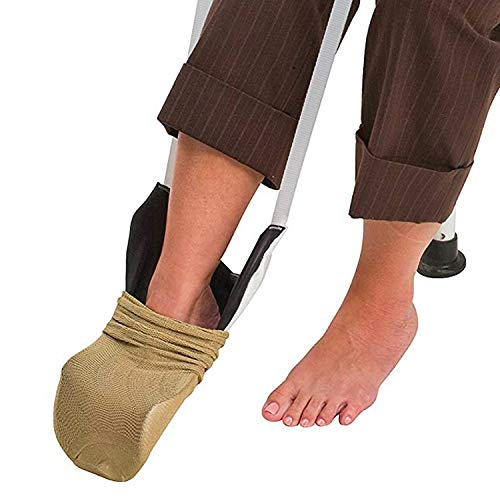
- No-bend design for socks and stockings
- Terry cloth cover helps prevent slipping
- Nylon lining reduces friction
Best For: Seniors and users recovering from lower-body surgery
Flexible Everyday Pick – RMS Deluxe Sock Aid
If you are comparing sock aids under 50, the RMS Deluxe Sock Aid is a practical choice for putting on regular socks without bending. Its flexible shell, adjustable cords, and foam handles are designed for users with limited mobility or weak hand strength.
Best For: Adults who need help with regular ankle, knee, calf-length, athletic, or dress socks and have feet measuring 5 inches wide or less.
Pros:
- Flexible, contoured plastic shell is easier to load for users with weak hand strength.
- Soft foam handles and a slip-resistant pad support a comfortable, secure grip.
- Adjustable 38-inch ropes allow the pulling length to be customized.
Cons:
- Not designed for compression socks, sheer anklets, or very thin hosiery.
- Suitable for foot widths of 5 inches or less.
The RMS model offers a straightforward design and useful cord adjustment for everyday socks. Confirm the sock type and foot-width limitations before buying.
Comfort-Grip Choice – Vive Sock Aid
Among sock aids under 50, the Vive Sock Aid focuses on comfortable handling and simple length adjustment. Its latex-free shell contours over the foot and heel, helping seniors and people recovering from surgery or injury put on socks independently.
Best For: Seniors and users with limited mobility who want padded handles, a slip-resistant cuff, and quick cord adjustments.
Pros:
- Latex-free plastic shell is shaped to slide over the foot and heel.
- 3 cm foam padding on each handle provides a comfortable grip.
- Button adjustors make it simple to modify the 33-inch cord length.
- Includes a 60-day Vive guarantee.
Cons:
- The supplied notes do not specify compatibility with compression socks.
- Hand-wash-only care may require extra maintenance.
Choose the Vive if padded handles and an easy adjustment system are priorities. Its lightweight design and warranty add reassurance for regular daily use.
Wide-Opening Value – 3.93-Inch Sock Aid
This wide-opening option is worth considering when shopping for sock aids under 50 that make dressing easier without bending. The contoured shell, extended lip, and adjustable ropes are intended to help users with limited mobility or weak hand strength put on regular socks.
Best For: Seniors, pregnant users, and post-surgery users with foot widths of about 4.2 inches or less who wear everyday socks.
Pros:
- Wide opening and sturdy shell are designed for a better fit.
- Extended lip and non-slip foam pad help keep socks in place.
- 38-inch adjustable ropes and soft foam handles support comfortable use.
- Smooth shell edges are designed to help socks slide on without tearing.
Cons:
- Not recommended for tight compression socks or extremely thick stockings.
- Best suited to foot widths measuring 4.2 inches or less.
The wide opening and cord adjustment make this a useful everyday dressing aid, provided your socks and foot width fall within its stated limits.
Two-in-One Dressing Aid – DMI Sock Aid & Shoe Horn
For shoppers comparing sock aids under 50, the DMI Sock Aid & Shoe Horn adds shoe assistance to the sock-loading function. Its long handle and cradle-based design are intended to reduce bending, stretching, and straining during dressing.
Best For: Adults with limited movement who want one tool for putting on socks, assisting with shoes, and removing socks.
Pros:
- Combines a sock aid and shoe horn in one mobility aid.
- Three-step process: place the sock on the cradle, place it on the floor, and slide in the foot.
- Long handle and hook grip provide support and can help remove socks.
- Designed for use with any type of sock or shoe according to the supplied notes.
Cons:
- Requires assembly in four pieces.
- A screwdriver is needed, though screws and a screwdriver are included.
- At 16 ounces, it is heavier than the other listed sock aids.
The DMI is the most versatile choice here if shoe assistance and sock removal matter as much as putting socks on. Expect a little setup before use.
Compact Compression Pick – Compression Sock Aid Donner
For shoppers comparing sock aids under 50, this compression stocking donner is designed to make application easier without repeated bending. Its steel frame holds the stocking open while foam-coated handles provide a more comfortable grip.
Best For: People with limited mobility, restricted bending motion, or reduced hand strength who wear compression socks and have calves under 16 inches.
Pros:
- Sturdy steel frame keeps the compression stocking open during application.
- Foam-coated handles support a secure, comfortable grip.
- Can be used from a seated or standing position.
- Designed specifically for small to medium calves under 16 inches.
Cons:
- Not suited to calves measuring 16 inches or more.
- Its stated design is for compression stockings rather than general sock types.
This is a focused choice for compression-sock users who need extra leverage and a stable frame. Check calf sizing before buying to help ensure the intended fit.
Complete Daily-Living Set – RMS Sock Aid Kit
Among sock aids under 50, the RMS kit stands out by combining a soft sock aid with a separate remover. It is made for regular socks and can help users dress without bending down, especially during mobility-limited recovery.
Best For: Adults with weak hand or arm strength, limited mobility, or difficulty bending who wear regular socks no wider than 5 inches at the foot.
Pros:
- Includes both a deluxe sock aid and a sock or stocking remover.
- Soft, flexible shell is easier to load for users with weak hand strength.
- Remover design provides leverage for taking off regular socks or stockings.
- Smooth materials help socks slide on and off without snagging.
Cons:
- Not intended for compression socks or compression stockings.
- Suitable for foot widths measuring 5 inches or less.
The two-piece format makes this a practical option when both putting on and removing regular socks are difficult. Confirm foot width and sock type before choosing it.
Lightweight No-Bend Option – Easy-On Sock Helper
This lightweight option is worth considering when comparing sock aids under 50 for everyday dressing. The flexible sock holder helps users pull on several common sock styles with little effort and without bending, twisting, or turning.
Best For: Seniors, people with disabilities, pregnant users, and others who want a simple aid for putting on ankle, knee, calf-length, athletic, trouser, or similar socks.
Pros:
- Supports putting on socks without bending over.
- Works with multiple regular sock styles, including ankle and knee socks.
- Terry cloth helps hold the sock while the nylon side reduces friction.
- Lightweight design weighs 2.4 ounces.
Cons:
- The notes do not specify a maximum foot width or calf circumference.
- Although compression sock use is mentioned, fit details for compression stockings are not provided.
Its low weight and broad list of compatible sock styles make it a convenient general-purpose helper. Buyers with compression socks should verify fit and suitability before relying on it.
Wide-Tube Ease – Jellas Sock Aid for Seniors
For shoppers comparing sock aids under 50, the Jellas Sock Aid offers a straightforward way to load a sock onto a 4-inch plastic tube, place your foot inside, and pull the sock up with less bending. Its 33-inch rope can also be shortened with knots to suit your reach.
Best For: Seniors and people with back, knee, hip, leg, or foot limitations who need help with regular socks or stockings.
Pros:
- Wide 4-inch tube accommodates feet up to the stated size limits.
- Anti-slip foam helps hold socks in place while dressing.
- 18.5-inch assembled length and 33-inch rope reduce the need to bend.
- Can be assembled with or without reinforcing nails.
Cons:
- Not the best choice for compression socks.
- Using nails makes the assembled aid difficult to remove without tools.
- Arm injuries may affect the user experience.
The wide tube and adjustable rope make this a practical option for users who want a simple sock helper with extra reach. Check the stated foot-size limits before buying.
Three-in-One Reach – Easy Sock Ox Adjustable Sock Aid
Among sock aids under 50, the Easy Sock Ox stands out for combining a sock aid, long-handle shoe horn, and sock remover. Its open cradle adjusts for width and length, allowing users to load socks flat and dress without bending from a chair, bed edge, or wheelchair.
Best For: Seniors and people recovering from hip or knee surgery, using wheelchairs, or avoiding waist bending who want help putting on and removing regular socks.
Pros:
- Combines a sock aid, shoe horn, and sock remover in one tool.
- Adjustable width helps accommodate wider feet and larger sizes.
- Removable extensions provide three length options and pack flat.
- Assembles by hand without tools and wipes clean with a damp cloth.
Cons:
- Not designed for compression socks.
- Requires setting the sock over the open cradle before use.
This is the most versatile choice in the group for users who need assistance at both ends of the dressing routine. The adjustable, open design also makes it convenient for travel and one-handed use.
Soft-Grip Classic – DMI Deluxe Sock Aid
For shoppers seeking sock aids under 50, the DMI Deluxe Sock Aid provides a simple no-bend method for pulling on socks or stockings. Its terry cloth cover helps keep the sock from slipping, while the nylon lining is designed to reduce friction during use.
Best For: Seniors and people with limited range of motion or who are recovering from hip, knee, or back surgery.
Pros:
- Allows socks or stockings to be put on without bending.
- Can be used while sitting or standing.
- Terry cloth cover helps prevent slipping.
- Nylon lining reduces friction.
Cons:
- Care requires hand washing with mild detergent and air drying.
- The supplied notes do not specify adjustability or compatibility with compression socks.
The DMI is a focused, traditional sock aid for users who want a basic dressing assist rather than a multi-function tool. Its slip-resistant cover and low-friction lining are useful details for routine sock application.
How We Picked the Best Sock Aids Under 50
We focused on practical features that affect everyday use: ease of loading a sock, handle or cord design, opening width, compatibility with regular or compression socks, stability during use, storage, and included accessories. We also considered whether each design appears suitable for seniors, people with limited mobility, and users who need to avoid bending.
Because fit and technique matter, no sock aid is ideal for everyone. A simple rigid slider may be easiest for standard socks, while compression stockings typically require a sturdier, purpose-built device and more careful sizing.
Quick Comparison
- Best for regular daily socks: Choose a basic rigid slider with foam handles or long pull cords.
- Best for limited hand strength: Look for large, comfortable handles and a design that holds the sock securely.
- Best for compression socks: Select a compression-specific donner with enough structure and an opening that matches the garment.
- Best for versatility: Kits combining a sock aid with a shoe horn or sock remover can reduce the need for additional dressing tools.
- Best for storage: Compact, lightweight models are easier to keep near a bed, chair, or dressing area.
Key Buying Factors for Sock Aids Under $50
Opening Size and Sock Compatibility
Check the device’s width against your usual socks. Narrow sliders can work well with standard men’s or women’s socks but may be difficult to load with thick athletic socks. Wider models can make loading easier, although they may feel bulkier.
Handles, Cords, and Grip
Foam-covered handles are useful when fingers are sensitive or grip strength is limited. Cord-style aids can accommodate different reach lengths, but they require enough hand control to pull evenly. Non-slip surfaces help keep the sock in place while the foot enters.
Regular Versus Compression Socks
Do not assume a standard sock aid will handle firm compression garments. Compression socks are tighter and may need a reinforced frame or dedicated donner. Confirm the product’s intended use and follow the garment manufacturer’s instructions.
Accessories and Maintenance
A shoe horn or sock remover can add meaningful value for users who struggle with both putting on and taking off footwear. Favor washable or easy-to-clean materials, especially if the aid is used daily.
Who Should Buy Which Sock Aids Under 50?
For seniors or users avoiding bending, start with a stable slider and long handles or cords. For arthritis or reduced grip, prioritize padded handles and a sock-retaining surface. For pregnancy or temporary recovery, a simple, lightweight model may provide the needed reach without unnecessary complexity. For compression garments, choose a dedicated compression sock aid and verify size compatibility before buying. For a complete dressing setup, a kit with a shoe horn or remover can be more convenient than purchasing separate tools.
Whichever model you choose, practice loading the sock while seated and keep the aid on a stable surface. If pain, swelling, or circulation issues are involved, ask a healthcare professional whether a particular device and dressing technique are appropriate.