Putting on socks can become surprisingly difficult when bending, gripping, or balancing is painful. The best ergonomic sock aids make the task more manageable by holding the sock open and extending your reach.
This roundup compares 10 options with features such as foam handles, adjustable cords, wider frames, sock removers, and compression-stocking support. Use the guide below to match the design to your mobility needs, sock type, and daily routine.
Best 10 Ergonomic Sock Aids Picks for 2026
Best Flexible Shell

- Flexible contoured shell supports easier sock loading
- Foam handles and non-slip pad improve control
- Adjustable 38-inch ropes suit different heights
Best For: Regular socks and users with limited mobility or hand strength
Best Wide Opening

- Wide opening measures approximately 4.2 inches
- Buckle adjusts the 38-inch cord quickly
- Smooth edges help guide regular socks
Best For: Users with limited mobility and feet up to 4.2 inches wide
Best One-Size Design

- Adjustable cord fits most heights and body types
- Built-up foam handles support a comfortable grip
- Helps reduce bending and pulling while dressing
Best For: Users seeking a simple regular-sock dressing aid
Best Complete Kit
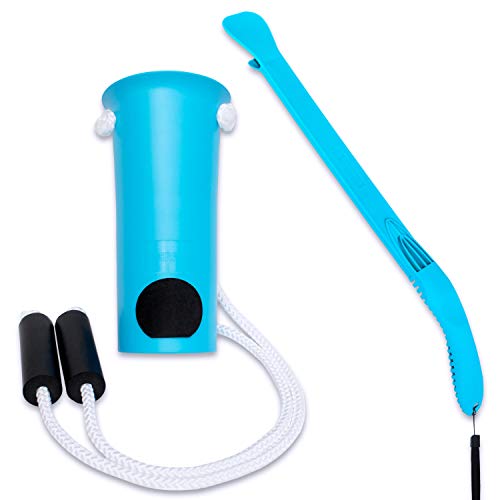
- Includes a sock aid and removal doffer
- Flexible pieces support weak hand strength
- Helps with both putting on and removing socks
Best For: Limited-mobility users who need a two-piece dressing solution
Gentle-Grip Sock Aid

- Fabric-covered grip helps hold everyday socks
- Designed to reduce bending and twisting
- Lightweight 2.4-ounce construction
Best For: Regular dress, casual, and athletic socks
Wide-Tube Sock Aid

- 4-inch tube accommodates a broad foot size range
- 33-inch rope reduces bending and adjusts by knots
- Includes a long assembled sock remover
Best For: Users needing extra reach and a wider tube
All-in-One Sock Aid
Adjustable Sock Ox Dressing Tool
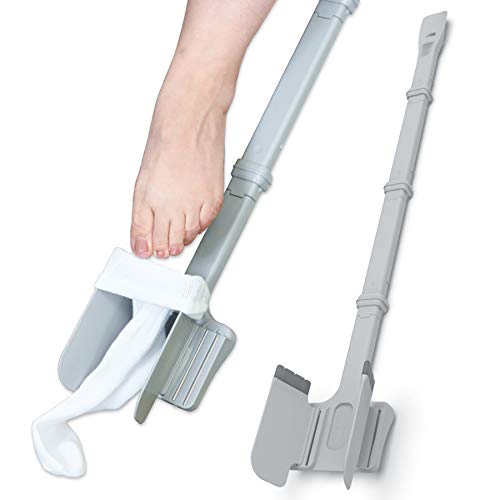
- Combines sock aid, shoe horn, and sock remover
- Adjustable width and three reach lengths
- Open cradle supports one-handed loading
Best For: Seated dressing, recovery, and wheelchair use
Best Multifunctional Pick

- Supports medium- to high-elasticity compression socks
- Ergonomic grip helps reduce bending and effort
- Includes a detachable multi-use dressing stick
Best For: Users who need sock assistance plus extra dressing support
Best Lightweight Choice
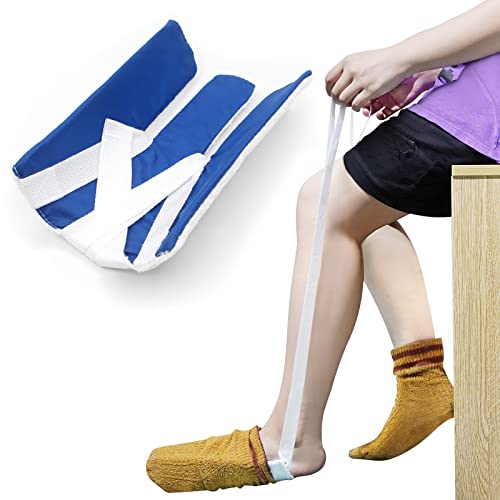
- Weighs just 2.4 ounces
- Terry cloth helps hold socks in place
- Works with many everyday sock styles
Best For: Users wanting a simple, portable sock aid
Best Adjustable Fit
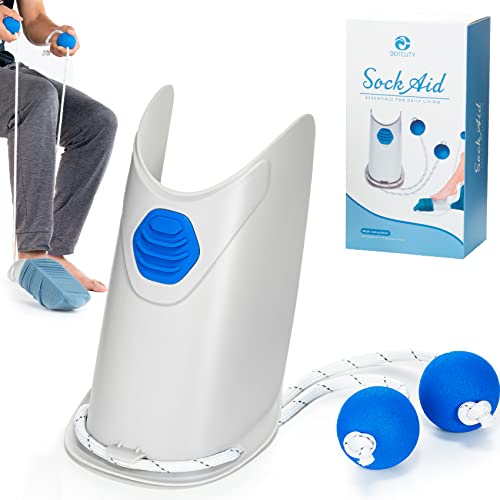
- Adjustable 30-inch cord
- Silicone pads help prevent sock slippage
- Compatible with many sock styles
Best For: Users who need customizable reach and a secure frame
Best Flexible Shell – RMS Deluxe Sock Aid
The RMS Deluxe Sock Aid is a practical option among ergonomic sock aids for users who have difficulty bending or limited hand strength. Its flexible contoured shell and foam handles are designed to help with regular socks without requiring the user to reach down to the foot.
Best For: Adults who need help putting on regular ankle, knee, calf-length, athletic, or dress socks and have foot widths of 5 inches or less.
Pros:
- Flexible shell is designed for easier sock insertion.
- Soft, non-slip foam handles provide a comfortable grip.
- Adjustable 38-inch ropes accommodate different user heights.
- Slip-resistant foam pad helps keep the sock in place.
Cons:
- Not intended for compression socks, sheer anklets, or very thin hosiery.
- Limited to foot widths of 5 inches or less.
With its flexible construction and adjustable cords, this model is a well-rounded choice for everyday regular socks, particularly for users with reduced bending ability or weak hand strength.
Best Wide Opening – 3.93-Inch Wide Sock Aid
This wide-opening sock aid is one of the ergonomic sock aids designed to reduce bending and straining. Its contoured plastic shell, extended lip, and adjustable foam-handled cord help guide regular socks over the foot and heel.
Best For: Seniors, pregnant users, post-surgery users, and others with limited mobility whose feet measure 4.2 inches or less.
Pros:
- Wide opening of approximately 4.2 inches supports a comfortable fit.
- Extended lip and non-slip foam pad help prevent sock slippage.
- Adjustable 38-inch ropes include a buckle for quick length changes.
- Smooth plastic edges are designed to help socks slide on without tearing.
Cons:
- Not recommended for tight compression socks or extremely thick stockings.
- Best suited to foot widths of 4.2 inches or less.
The wider shell and quick-adjust buckle make this a convenient choice when fit and cord adjustment are priorities, though it remains intended for regular everyday socks.
Best One-Size Design – Mars Wellness Deluxe Sock Aid
The Mars Wellness Deluxe Sock Aid offers a straightforward approach to putting on regular socks. As an ergonomic sock aid, it uses a plastic shell, foam built-up handles, and adjustable cords to reduce bending and pulling while dressing.
Best For: Users of different heights and body sizes who need assistance putting on regular socks or stockings.
Pros:
- Simple design requires slipping the sock over the shell and pulling the cords.
- Foam built-up handles provide a comfortable, supportive grip.
- Adjustable cord helps accommodate most heights and body types.
- Designed to reduce strenuous bending and pulling motions.
Cons:
- The supplied notes do not specify compatibility with compression socks.
- The product details do not provide a specific foot-width limit.
Its one-size approach and adjustable cord make this a practical basic aid for households seeking an easy-to-use dressing tool without a complicated setup.
Best Complete Kit – RMS Sock Aid Kit
The RMS Sock Aid Kit stands out among ergonomic sock aids because it includes tools for both putting on and removing regular socks. The flexible sock aid supports users with limited mobility, while the included doffer provides added leverage for taking socks off.
Best For: People recovering from back, knee, or hip replacement surgery, or anyone with limited mobility who needs help donning and removing regular socks.
Pros:
- Two-piece set includes a sock aid and a sock or stocking remover.
- Flexible shell is designed for users with weak hand strength.
- Doffer helps maximize leverage for users with limited arm strength.
- Smooth, flexible components help socks slide on and off without snagging.
Cons:
- Not intended for compression socks or compression stockings.
- Suitable for foot widths of 5 inches or less.
- The included tools are designed for regular socks and stockings.
For users who need assistance at both ends of the dressing process, this kit offers more functionality than a standalone sock donner while retaining a flexible, easy-slide design.
Gentle-Grip Sock Aid – Three-Finger Sock Helper
This compact sock aid is a practical choice for anyone seeking ergonomic sock aids that reduce bending, twisting, and reaching. Its three-finger design and terrycloth-and-nylon covering are intended to hold everyday socks securely while helping them slide on with less friction.
Best For: Seniors, pregnant users, people with disabilities or limited mobility, and anyone who needs help with regular dress, casual, or athletic socks.
Pros:
- Three-finger design helps hold socks for easier loading and pulling.
- Terrycloth exterior and nylon interior provide a gentle yet firm grip.
- Compact, lightweight design weighs just 2.4 ounces.
Cons:
- Not recommended for compression socks.
- May be less suitable for users who need a longer-handled aid.
Choose this model if you want a simple, lightweight sock helper for common sock types and a more independent dressing routine. Its compact shape favors portability, while the fabric covering is designed to help reduce snagging and friction.
Wide-Tube Sock Aid – Jellas 4-Inch Sock Helper Kit
For shoppers comparing ergonomic sock aids, this Jellas kit combines a wide plastic tube with a long rope and an assembled sock remover. The 4-inch tube is designed to accommodate feet up to the stated size range, while the 33-inch rope can help reduce the need to bend.
Best For: Seniors, people with back or mobility limitations, and users recovering from knee or hip replacement surgery who wear regular socks or long stockings.
Pros:
- Wide 4-inch tube is designed for feet up to 14 inches long and 4 inches wide.
- 33-inch rope can be shortened with knots to suit the user.
- Anti-slip foam helps keep the sock in place during use.
- Includes an assembled sock remover with an 18.5-inch total length.
Cons:
- Not the best choice for compression socks.
- Using nails to reinforce the remover makes it difficult to disassemble without tools.
- Arm injuries may affect the user experience.
This model stands out when reach and tube width are priorities. The adjustable rope supports different heights, but buyers who frequently store or transport the aid may prefer to assemble it without nails for easier handling.
All-in-One Sock Aid – Adjustable Sock Ox Dressing Tool
Among ergonomic sock aids, the Sock Ox is designed as a three-in-one dressing tool: a rigid sock cradle, a long-handle shoe horn, and a built-in sock remover. Its adjustable width and three length options let users configure the aid for their foot and reach, including use from a chair, bed edge, or wheelchair.
Best For: Seniors, people recovering from hip or knee surgery, wheelchair users, and anyone instructed to avoid bending at the waist.
Pros:
- Combines a sock aid, long-handle shoe horn, and sock remover.
- Adjustable width helps accommodate wide feet and larger sizes.
- Three removable extensions provide adjustable reach and pack-flat storage.
- Open cradle loads flat and can be used with one hand.
Cons:
- Not designed for compression socks.
- More involved than a basic sock aid because it has multiple adjustable pieces.
This is the most versatile option of the three for users who need help both putting socks on and taking them off. Its tool-free assembly, adjustable configuration, and open cradle make it particularly practical for seated dressing and travel.
Best Multifunctional Pick – Compression Sock Aid Device
For shoppers comparing ergonomic sock aids, this kit combines a plastic sock-support shell with an ergonomic grip and a detachable dressing stick. It is designed to help users put on medium- to high-elasticity compression socks without bending as much.
Best For: People recovering from back, knee, or hip surgery, or anyone with limited flexibility, reach, or strength who also wants extra dressing assistance.
Pros:
- Plastic shell supports compression socks with medium to high elasticity.
- Ergonomic grip is intended to make pulling on socks easier with limited strength.
- Detachable dressing stick includes interchangeable plugs for scratching, putting on shoes, and putting on clothes.
- Detachable design makes the auxiliary rod easier to carry.
Cons:
- The product is relatively large and heavy compared with simpler sock aids.
- The plastic head may feel slightly hard because it is designed for robustness.
- The notes do not specify a fit range for sock sizes or compression levels beyond medium to high elasticity.
This is the most versatile option of the three, particularly for users who want more than a sock donner. Its added dressing functions may justify the larger kit for people with broader mobility limitations.
Best Lightweight Choice – No-Bending Sock Aid
This lightweight option is one of the simpler ergonomic sock aids for putting on everyday socks without bending, twisting, or turning. Its terry-cloth lining helps hold the sock while the nylon side is designed to reduce friction during use.
Best For: Seniors, pregnant users, and people with disabilities or mobility limitations who want a compact aid for ankle, knee-high, calf-length, athletic, trouser, and similar socks.
Pros:
- Designed for easy sock application with little effort and no bending over.
- Works with several sock styles, including ankle, knee, calf-length, athletic, trouser, and compression socks.
- Gentle terry cloth helps hold the sock while the nylon surface reduces friction.
- At 2.4 ounces, it is notably lightweight for storage and handling.
Cons:
- The notes do not mention adjustable cords or handles for customizing reach.
- Specific sock-size and compression-level limits are not provided.
- It is focused on sock application rather than broader dressing tasks.
Choose this model if portability and straightforward operation matter most. It offers broad everyday sock compatibility, though users seeking adjustable reach or multitask functionality may prefer another design.
Best Adjustable Fit – Corded Sock Aid Tool
Among ergonomic sock aids, this corded design stands out for its adjustable 30-inch cord and non-slip silicone pads. The plastic frame is loaded with the sock before you step into it and pull the handles upward.
Best For: People with limited bending ability, flexibility, or reach who want adjustable cord length and support for a wide range of sock types.
Pros:
- Adjustable cord can be set to suit the user’s convenience.
- Non-slip silicone pads help keep socks from sliding off the frame.
- Durable plastic is designed to withstand pressure.
- Works with ankle, knee, calf-length, athletic, trouser, dress, and other listed sock styles.
Cons:
- The 7.05-ounce weight is higher than the lightweight terry-cloth option.
- The notes do not specifically confirm suitability for compression socks.
- Users must stretch the sock over the frame and heel pocket before stepping into it.
This is a practical middle ground for shoppers who value adjustability and grip. Its broad stated sock compatibility makes it versatile, while the cord-and-frame setup may require a little more preparation than a simpler sock helper.
How We Picked the Best Ergonomic Sock Aids
We focused on practical features that affect everyday use: how easily the aid loads, how securely it holds a sock, handle comfort, reach, adjustability, durability, and compatibility with different sock materials. We also considered specialized needs, including compression stockings and users who have limited hand strength, reduced flexibility, or difficulty bending.
Because fit and technique vary, the most expensive or feature-heavy option is not automatically the best choice. A simple, stable sock aid may work better than a complicated design if it is easy to load and comfortable to control.
Quick Comparison
| Best For | Look For | Helpful Features |
|---|---|---|
| Everyday socks | Wide, smooth cradle | Foam handles or long cords |
| Limited reach | Extended handles or adjustable cords | No-bending operation |
| Weak grip | Large, padded handles | Low pulling resistance |
| Compression stockings | Reinforced, stocking-specific design | Replaceable dressing stick |
| Different users | Adjustable configuration | Customizable cord length |
Key Buying Factors for Ergonomic Sock Aids
Sock Compatibility
Check whether the device is intended for regular socks, dress socks, ankle styles, or compression hosiery. A cradle that is too narrow can make loading difficult, while a very wide model may not hold small socks securely.
Handle and Cord Design
Foam-covered handles are useful for comfort and grip. Adjustable cords help accommodate different heights and reach limitations, but they may require more setup. Choose the simplest control style you can operate confidently.
Stability and Loading
A good aid should keep the sock open while you lower your foot into it. Smooth edges help prevent snagging, and a firm frame is easier to manage than a flexible one that collapses during loading.
Removal and Maintenance
Some models include a sock remover or dressing stick, which can be valuable if pulling off socks is also difficult. Look for washable materials and designs that can be stored without tangling cords.
Who Should Buy Which Ergonomic Sock Aids?
For everyday socks and occasional assistance, choose a straightforward cradle with comfortable handles. Seniors or people recovering from surgery may prefer a longer reach and padded grips to reduce bending and strain. Users with limited hand strength should prioritize wide handles and a low-effort pull. If you regularly wear compression stockings, select a model specifically designed for their tighter fabric rather than relying on a basic sock aid.
Before purchasing, consider where you will use it, whether you can reach your feet comfortably, and whether another person may need to load the device. The right ergonomic sock aid should make dressing more independent—not add another difficult step to the routine.