Long hours at the wheel, wedging table, or glazing station can put significant strain on your feet, knees, and lower back. The right anti-fatigue mat adds cushioning and traction while helping define a cleaner, more comfortable standing area.
This roundup compares 10 options for pottery studios, from compact foam mats for individual stations to heavy-duty vinyl designs suited to messy, high-traffic workspaces.
Best 10 Anti Fatigue Mat for Pottery Studio Picks for 2026
Deep-Cushion Workshop Comfort
FEATOL 0.9-inch Anti-Fatigue Mat

- 0.9-inch high-density memory foam cushioning
- PU leather, wipe-clean surface
- Yellow border with beveled, non-slip edges
Best For: Single-station pottery work requiring substantial cushioning
Oversized Station Coverage
Saloniture 3 x 4-Foot Anti-Fatigue Mat

- Large semicircular 3-by-4-foot coverage
- 5/8-inch NBR foam cushioning
- Waterproof, stain-resistant surface
Best For: Wide pottery workstations with frequent side-to-side movement
Long Rectangular Reach
Ophanie 20 x 48-Inch Cushioned Mat
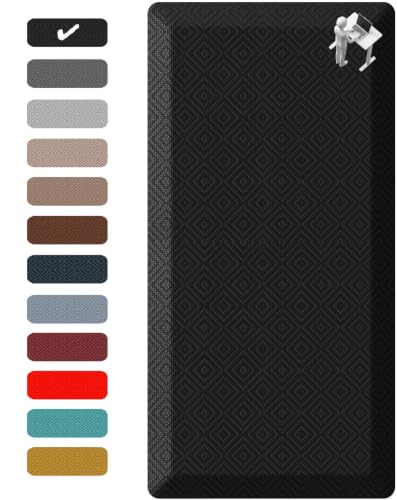
- 48-inch length for extended station coverage
- 0.75-inch recycled PU foam cushioning
- Slip-resistant backing with ramped edge
Best For: Long, narrow pottery benches and cleanup counters
Industrial-Grade Studio Defense
Durable Corporation 442S Vinyl Mat

- 7/8-inch sponge backing for cushioned support
- Diamond tread and beveled yellow edges
- Resists oils, alkalis, and acids
Best For: High-traffic, messy pottery work zones
Best Thick Foam Cushion
UKISS 9/10-Inch Anti-Fatigue Mat

- Extra-thick memory-foam cushioning
- Waterproof, wipe-clean surface
- Non-skid backing with beveled edges
Best For: Individual pottery workstations and studio sinks
Best for Large Studio Coverage
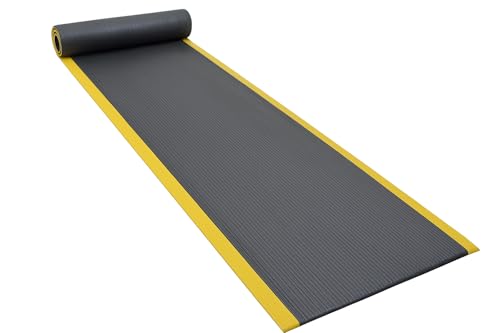
- Long 3-by-12-foot coverage
- Durable, resilient vinyl foam
- Can be cut to fit a space
Best For: Long benches and shared pottery work areas
Best Visible Workstation Mat

- 9/10-inch memory-foam cushioning
- High-visibility yellow border
- Durable, wipe-clean polyurethane surface
Best For: Individual stations in busy shared studios
Best Value
Amazon Basics 3/4-Inch Comfort Mat

- High-grade foam cushioning
- Compact 32-by-20-inch footprint
- Damp-cloth maintenance
Best For: Single pottery workstations and compact standing areas
Best for Large Work Areas
Guardian Air Step 3-by-5-Foot Mat

- Large 36-by-60-inch coverage
- Durable 3/8-inch vinyl construction
- Can be cut to fit
Best For: Large pottery stations and custom-shaped studio layouts
Best Portable Option
Ergohead Massage-Point Standing Mat

- Carrying handle for easy transport
- 0.75-inch memory-foam cushioning
- Slip-resistant bottom
Best For: Moving between pottery wheels, tables, and studio stations
Deep-Cushion Workshop Comfort – FEATOL 0.9-inch Anti-Fatigue Mat
For a pottery studio, the FEATOL is an anti fatigue mat for pottery studio tasks that benefit from substantial cushioning. Its 0.9-inch high-density memory foam construction is designed to ease pressure during extended standing, while the PU leather surface and beveled edges suit practical workshop use.
Best For: Potters who want thick cushioning at a single workstation or near a standing bench.
Pros:
- 0.9-inch memory foam helps cushion feet, knees, and lower back.
- PU leather top resists punctures, tears, and cracking, and wipes clean.
- Non-slip backing and low-angle beveled edges help limit movement and tripping.
- Yellow border improves visibility in a busy studio.
Cons:
- The 20-by-39-inch footprint may not cover a larger throwing or glazing area.
- The bright yellow border may not suit every studio aesthetic.
The FEATOL is a strong choice when cushioning and visible edge definition matter most. Its compact rectangular size works well for one primary standing position, rather than covering a broad production zone.
Oversized Station Coverage – Saloniture 3 x 4-Foot Anti-Fatigue Mat
The Saloniture offers broad coverage for an anti fatigue mat for pottery studio work, giving you room to shift forward, backward, and sideways around a station. Its 3-by-4-foot semicircular design and 5/8-inch NBR foam cushioning can suit a wheel, workbench, or cleanup area on a hard floor.
Best For: Potters who move around a larger workstation and want floor protection beneath it.
Pros:
- Large 3-by-4-foot footprint provides room to move without stepping off.
- 5/8-inch cushioning is designed to reduce standing fatigue and pressure.
- Waterproof matte surface wipes clean and resists stains from oils and similar messes.
- Textured top and beveled edges support safer footing.
Cons:
- The semicircular shape may be less adaptable than a rectangular mat in tight layouts.
- At 5/8 inch, it is thinner than the thickest options in this roundup.
Choose the Saloniture when coverage is more important than maximum thickness. Its generous shape is particularly practical for stations where pottery work involves frequent side-to-side movement.
Long Rectangular Reach – Ophanie 20 x 48-Inch Cushioned Mat
The Ophanie is a practical anti fatigue mat for pottery studio layouts that need a longer, rectangular standing surface. Its 20-by-48-inch profile provides extended front-to-back coverage, while the 0.75-inch recycled PU foam cushion supports prolonged standing at a bench or sink.
Best For: Long, narrow pottery stations such as workbenches, glazing counters, or cleanup areas.
Pros:
- 48-inch length covers a substantial stretch of a standing workspace.
- 0.75-inch high-density foam provides shock absorption and support.
- PVC leather surface resists wear, tearing, and deformation, and wipes clean.
- Slip-resistant backing, progressive ramp edge, and 99-plus bottom ridges support stability.
Cons:
- The 20-inch width may not accommodate broad movement around a large wheel.
- The notes specify wiping with a damp cloth, rather than a more intensive cleaning method.
The Ophanie balances useful length with moderate cushioning and arrives flat to help avoid rolled edges. It is a good fit when your studio station is linear and you want coverage along its full working span.
Industrial-Grade Studio Defense – Durable Corporation 442S Vinyl Mat
For demanding studio conditions, the Durable Corporation 442S is an anti fatigue mat for pottery studio areas where secure footing and easy maintenance are priorities. Its 7/8-inch sponge backing, diamond tread surface, and beveled yellow-bordered edges are suited to high-traffic work zones.
Best For: Heavy-use pottery studios needing a durable mat around messy or high-traffic work areas.
Pros:
- 7/8-inch sponge backing provides cushioned support for standing tasks.
- Diamond tread surface helps provide secure footing.
- Foam backing resists various oils, alkalis, and acids.
- Can be swept or mopped with mild detergent for straightforward maintenance.
Cons:
- The 24-by-36-inch size offers less coverage than the larger Saloniture option.
- Its industrial black-and-yellow appearance may feel utilitarian in a home studio.
The 442S makes sense when pottery work involves frequent spills, traffic, or exposure to common workshop substances. Its compact footprint is best for a defined standing zone rather than a full room-length station.
Best Thick Foam Cushion – UKISS 9/10-Inch Anti-Fatigue Mat
For a pottery studio, the UKISS mat is a practical anti fatigue mat for pottery studio tasks that require standing at a workbench, sink, or workstation. Its thick memory-foam construction provides cushioning, while the waterproof surface is suited to areas where water, clay residue, or other messes may occur.
Best For: Pottery workstations, studio sinks, and indoor areas where cushioned standing comfort and easy wipe-down care are priorities.
Pros:
- Extra-thick 0.79-inch memory foam helps reduce pressure during extended standing.
- Waterproof surface can be wiped clean after spills, stains, or splashes.
- Non-skid backing and beveled edges help keep the mat stable and reduce tripping risk.
- At 20 by 48 inches, it fits many individual workstations.
Cons:
- The 20-inch width may not cover a broad studio work area.
- Its soft foam design may be less suitable for heavy-duty industrial traffic than a vinyl mat.
The UKISS is a strong choice when comfort and cleanup matter most. Its compact rectangular size works well at a single pottery station, though larger studios may need more than one mat.
Best for Large Studio Coverage – Guardian Air Step Vinyl Mat
The Guardian Air Step is a useful anti fatigue mat for pottery studio spaces that need broad floor coverage. Its 3-by-12-foot vinyl design can protect a long line of standing stations, and the material can be cut with scissors to fit a more customized layout.
Best For: Long pottery work areas, shared studio benches, and high-traffic zones needing a durable, easily customized mat.
Pros:
- Large 36-by-144-inch size covers an extensive standing area.
- 3/8-inch vinyl foam construction is designed for durability and resilience.
- Can be cut to fit specific spaces with a pair of scissors.
- Yellow stripes improve visibility around the mat’s edges.
Cons:
- At 30 pounds, it is relatively heavy to move or reposition.
- The 3/8-inch thickness offers less cushioning than the thicker memory-foam alternatives.
- Care is limited to wiping with a damp cloth.
Choose the Guardian when coverage and durability outweigh maximum cushioning. Its long format is especially practical for a row of pottery stations, while the cut-to-fit design adds installation flexibility.
Best Visible Workstation Mat – Yellow-Border Memory Foam Mat
This 2-by-3-foot mat combines high-density memory-foam cushioning with a bright yellow border, making it a practical anti fatigue mat for pottery studio stations where you want a clearly defined standing area. Its wipe-clean polyurethane leather surface is designed for demanding everyday use.
Best For: Individual pottery stations, busy shared studios, and work areas where visibility, cushioning, and slip resistance are important.
Pros:
- 9/10-inch memory foam helps cushion feet, knees, legs, and lower back while standing.
- Bright yellow borders make the workstation easier to see.
- Textured non-slip backing and beveled edges support stable placement.
- Polyurethane leather surface resists punctures, tears, compression, and everyday wear.
Cons:
- The 2-by-3-foot footprint covers less space than the Guardian mat.
- Hand-wash-only care may require more effort than a simple wipe-down routine.
- The yellow border may not suit studios seeking a subdued appearance.
This mat is a balanced option for a single pottery workstation. It offers thick cushioning and a durable surface, while the high-visibility border can help define standing zones in a shared studio.
Best Value – Amazon Basics 3/4-Inch Comfort Mat
If you need an anti fatigue mat for pottery studio tasks, this Amazon Basics mat provides a straightforward cushioned surface for standing at a wheel, worktable, or glazing counter. Its 32-by-20-inch footprint is compact, while the high-grade foam construction is designed to support your feet during extended standing.
Best For: Potters who want a compact, easy-care mat for a single standing workstation.
Pros:
- High-grade foam provides cushioning and support.
- Compact 32-by-20-inch size fits many workstations.
- Wipes clean with a damp cloth.
Cons:
- Smaller coverage than a full studio floor mat.
- Notes do not specify a non-slip bottom or custom-cut capability.
This is a practical choice when you want basic standing comfort without covering a large area. Measure your main pottery work zone first to confirm that the compact dimensions provide enough coverage.
Best for Large Work Areas – Guardian Air Step 3-by-5-Foot Mat
For a larger pottery studio standing zone, this Guardian Air Step mat offers 36-by-60-inch coverage and a resilient 3/8-inch vinyl construction. The vinyl foam structure is intended to reduce fatigue and discomfort, and the mat can be cut with scissors to fit around studio layouts.
Best For: Potters who need broad coverage around a wheel, workbench, or shared studio station.
Pros:
- Large 3-by-5-foot surface covers more standing space.
- 3/8-inch vinyl construction is designed for durability and resilience.
- Can be cut to a custom size with scissors.
- Yellow borders provide a visible safety accent.
Cons:
- At 10 pounds, it is less convenient to move frequently.
- Requires cutting for irregular studio spaces.
- Wipe-clean care may not remove heavily embedded clay without additional cleaning.
This mat stands out when coverage and adaptability matter more than portability. Its cut-to-fit design is especially useful for fitting a mat around fixed pottery equipment, provided you plan the final shape before trimming.
Best Portable Option – Ergohead Massage-Point Standing Mat
This 17-by-22-inch mat is a portable option for potters who move between a wheel, craft table, and cleanup area. Its 0.75-inch polyurethane memory-foam construction provides cushioning, while massage points, a carrying handle, and a slip-resistant bottom add convenience for changing work locations.
Best For: Potters who need to carry one compact mat between multiple studio stations.
Pros:
- Built-in handle makes transport and storage easier.
- Massage points are designed to encourage blood circulation and muscle movement.
- Polyurethane memory foam provides cushioned standing support.
- Slip-resistant bottom helps keep the mat in place.
Cons:
- 17-by-22-inch dimensions provide limited coverage.
- Its portable size may not suit wide wheel or workbench areas.
- Wipe-clean care may require frequent attention in a clay-heavy studio.
This is a convenient pick for flexible studio setups rather than permanent floor coverage. Choose it when portability and thicker cushioning are priorities, and use its smaller footprint where you stand most often.
How We Picked the Best Anti Fatigue Mat for Pottery Studio
We focused on the demands of ceramic work rather than treating these as ordinary kitchen or office mats. The most important considerations were cushioning for prolonged standing, resistance to water and studio debris, slip control, edge stability, cleanability, and usable coverage around wheels, worktables, sinks, and glazing areas. Thickness, construction, and listed dimensions were also considered because a mat that feels comfortable may still be impractical if it shifts, curls, or cannot withstand clay and moisture.
The selection includes compact mats for single-user stations, larger layouts for production areas, and rugged industrial-style surfaces for studios where durability and easy maintenance matter more than a soft residential feel.
Quick Comparison
| Best for | Look for | Why it matters |
|---|---|---|
| Pottery wheel | Stable backing and moderate cushioning | Supports long sessions without creating an unstable footing. |
| Wedging or worktable | Dense foam or sponge construction | Helps reduce fatigue during repetitive standing tasks. |
| Wet or messy areas | Water-resistant, sealed vinyl surface | Makes clay, glaze, and water easier to wipe away. |
| Large studio zones | Long or wide dimensions | Provides continuous coverage and fewer exposed floor transitions. |
Key Buying Factors for an Anti-Fatigue Mat for Pottery Studio
Cushioning and Thickness
Thicker mats can feel more comfortable during long sessions, but maximum thickness is not automatically best. Very soft foam may compress under a stool, wheel pedal, or heavy equipment. Choose a supportive surface that cushions your feet without making balance or movement difficult.
Material and Cleanup
Closed-cell foam and vinyl are generally practical choices because they resist moisture and can be wiped down. A textured or diamond-patterned top can improve traction, although deep patterns may hold clay particles. Avoid materials that absorb water or have exposed fabric in areas where slurry and glaze spills are common.
Size, Edges, and Stability
Measure the area where you actually stand, including space for pedal movement and repositioning. A compact mat may suit a wheel, while a long mat can cover a workbench or sink zone. Look for beveled edges, a non-slip underside, and a mat heavy enough to stay flat. Keep edges away from rolling stools and walkways to reduce trip hazards.
Durability and Maintenance
Industrial vinyl mats are often better for high-traffic studios, while softer kitchen-style mats may prioritize comfort and appearance. Check cleaning instructions, avoid harsh chemicals unless approved, and lift the mat periodically so moisture and clay dust do not collect beneath it.
Who Should Buy Which Anti Fatigue Mat for Pottery Studio?
Choose a thicker cushioned mat if you spend several hours at one standing station and prioritize foot comfort. Select a heavy-duty vinyl or sponge industrial mat for shared studios, frequent spills, carts, and abrasive debris. A long runner is useful along a workbench or sink, while a smaller rectangular mat is easier to move between a wheel, wedging table, and cleanup area.
For a home studio, prioritize a manageable size, easy storage, and a surface that will not damage finished flooring. For a professional or community studio, favor durable construction, secure edges, and simple wipe-down maintenance. No mat replaces safe housekeeping: clean spills promptly, keep the surrounding floor free of clay, and inspect the underside regularly for trapped moisture or wear.