The best adjustable wheelchair ramps make everyday entry points easier to navigate while fitting the user, mobility device, and available space. This roundup compares portable, telescoping, and threshold designs for homes, vehicles, and short-term access needs.
Before buying, confirm the threshold or step height, ramp length, weight rating, surface traction, and storage requirements. A ramp that fits the doorway but lacks adequate slope or stability may be difficult or unsafe to use.
Best 10 Adjustable Wheelchair Ramps Picks for 2026
Best Portable Pick

- Folds for transport and storage
- Dual non-skid surface design
- For 4–12-inch step heights
Best For: Portable access over home or garage steps
Best Adjustable Threshold

- Adjusts from 2.6–6 inches
- 1,100-pound aluminum capacity
- Independent swivel-foot adjustment
Best For: Door thresholds and uneven single-step entryways
Best Compact Option

- Lightweight, folding aluminum design
- For 2–6-inch rises
- 800-pound maximum load
Best For: Low steps and temporary portable access
Best Wide-Range Adjustability

- Adjusts from 2.6–7.3 inches
- Wide 30-inch access surface
- 1,100-pound aluminum capacity
Best For: Wide doorways and higher single-step transitions
Best for Easy Setup
FACHNUO 3FT Folding Wheelchair Ramp

- 800-pound aluminum capacity
- Folds with a carrying handle
- Designed for 3–9-inch rises
Best For: Portable access over short home steps and thresholds
Best Travel Option
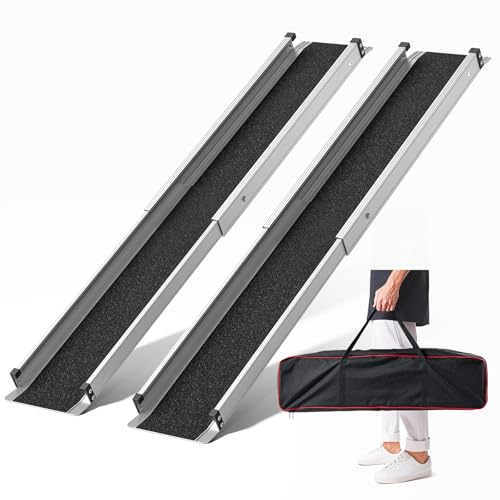
- Extends from 48 to 84 inches
- Includes a storage bag
- 600-pound capacity for manual wheelchairs
Best For: Travel, vehicles, and flexible temporary setups
Best Heavy-Duty Threshold Ramp
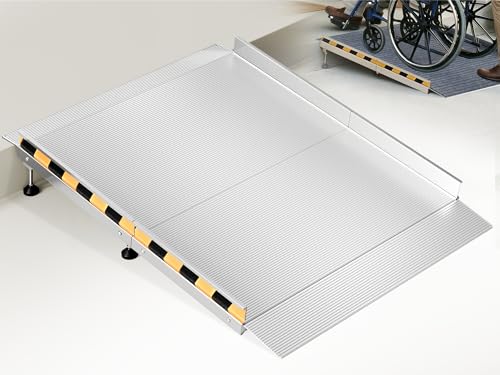
- Supports up to 1,000 pounds
- Adjusts for 3.3–9.2-inch rises
- Includes leveling feet and a non-slip mat
Best For: Frequent home entryway and single-step access
Best Heavy-Duty Threshold Pick
Adjustable Platform Threshold Ramp

- 3–6-inch adjustable height
- 1,000-pound load capacity
- Wide 42.5-by-23.2-inch carbon steel platform
Best For: Door thresholds and heavy-duty home entry
Best Long-Reach Pick
7FT Telescoping Aluminum Ramps

- Extends to 84 inches
- 600-pound two-piece aluminum design
- Storage bag and triple anti-skid system
Best For: Longer steps, porches, and manual wheelchair vehicle loading
Best Portable Pick – 4FT Folding Wheelchair Ramp
For shoppers comparing adjustable wheelchair ramps for home steps, this 4-foot folding model offers a portable aluminum design with a stated 800-pound capacity. It is intended for step heights from 4 to 12 inches, so measure the rise before ordering.
Best For: Home entrances, garage steps, and temporary access for wheelchairs, scooters, carts, strollers, or walkers.
Pros:
- Folds for carrying and storage and includes a comfortable handle.
- Textured aluminum and an added non-skid layer provide dual traction features.
- Side baffles, reflective warning stickers, and transition plates support safer placement.
- Stainless steel hinges are designed to resist rust and corrosion.
Cons:
- Its recommended step-height range is limited to 4–12 inches.
- The ramp may sink slightly during use before rebounding.
- It must not be loaded beyond 800 pounds.
This is a practical choice when portability and broad application matter, provided the step height and weight limit fit your setup. Use the included buyer’s guide and secure the ramp as directed.
Best Adjustable Threshold – 22 x 36-Inch Entry Ramp
This adjustable wheelchair ramp is designed for door thresholds and small steps from 2.6 to 6 inches high. Its independent height adjustment and swivel feet can help it sit securely when floors or entryways are uneven.
Best For: Doorways and single-step transitions used by wheelchairs, power chairs, mobility scooters, walkers, carts, or bikes.
Pros:
- Each side adjusts independently with heightening screws and swivel feet.
- Supports up to 1,100 pounds while using corrosion-resistant aluminum.
- Frosted anti-slip strips promote traction and allow water to dry quickly.
- Rubber strips underneath help improve contact with the floor.
Cons:
- The adjustment range stops at 6 inches.
- Buyers need to measure threshold rise, available space, and door clearance first.
- It requires a firm surface and stable feet before use.
With its wide 22-inch access surface and independently adjustable supports, this model suits threshold applications where a fixed ramp may not sit evenly. Confirm clearance and placement before purchasing.
Best Compact Option – FACHNUO 2FT Folding Ramp
Among compact adjustable wheelchair ramps, this 2-foot aluminum model is sized for rises from 2 to 6 inches, with wheelchair use recommended for steps no higher than 4 inches. It folds with a built-in handle and has an 800-pound maximum load.
Best For: Temporary access over low home steps and thresholds for compatible wheelchairs, power chairs, scooters, and walkers.
Pros:
- Folds to a compact size and weighs about 10.9 pounds.
- Textured aluminum provides a non-skid surface.
- Baffles, reflective strips, and extended guide rails add visibility and edge protection.
- Corrosion-resistant stainless steel hinges support indoor or outdoor use.
Cons:
- Wheelbase must not exceed 27 inches.
- For wheelchair access, the recommended step height should not exceed 4 inches.
- Vertical side walls and extension plates may interfere with hinged or sliding doors.
This ramp is convenient when storage space and portability are priorities, but compatibility checks are especially important. Ensure the front extension plate is flush with the ground and verify door clearance before use.
Best Wide-Range Adjustability – 30 x 36-Inch Threshold Ramp
This wide adjustable wheelchair ramp offers a 30-inch access width and adjusts from 2.6 to 7.3 inches using independently adjustable legs, swivel feet, and booster screws. It is built for doorways, uneven surfaces, and single-step rises.
Best For: Wider entrances and higher threshold transitions used with wheelchairs, scooters, walkers, carts, bikes, or buggies.
Pros:
- 30-inch width provides a broad access surface.
- Adjustable legs and booster screws cover rises up to 7.3 inches.
- Aluminum construction supports up to 1,100 pounds.
- Frosted surface strips and underside rubber strips support traction and stability.
Cons:
- At about 17 pounds, it is heavier than the compact folding option.
- It still requires a firm surface and properly adjusted feet.
- Buyers should verify the threshold height and available clearance before ordering.
This is a strong fit when a wider surface and more height flexibility are more important than minimal weight. Its no-professional-tools setup also makes it practical for changing entry conditions.
Best for Easy Setup – FACHNUO 3FT Folding Wheelchair Ramp
For shoppers comparing adjustable wheelchair ramps for short steps, the FACHNUO 3FT model combines a folding aluminum design with an 800-pound capacity. It is intended for rises from 3 to 9 inches, so measure your step height and confirm the ramp length before buying.
Best For: Home steps, thresholds, and users who need a portable ramp for manual or electric wheelchairs, scooters, walkers, or trolleys.
Pros:
- Supports up to 800 pounds.
- Folds and includes a suitcase-style carrying handle.
- Non-slip pleated surface, side baffles, reflective strips, and extended guide rails improve traction and visibility.
- Rust-resistant aluminum with a stainless-steel hinge.
Cons:
- At 16.3 pounds, it may be less convenient to carry than smaller ramps.
- The recommended rise range is limited to 3–9 inches.
- Buyers should follow the stated length-to-rise guidance rather than using it for taller steps.
This is a practical choice when you want a sturdy, foldable ramp with a generous load rating. Its 3-foot length is most appropriate when the installation space and step height match the manufacturer’s recommendations.
Best Travel Option – KOLOTOOL 7FT Telescoping Ramp
If storage space and transportability are priorities, this telescoping option stands out among adjustable wheelchair ramps. The two-piece aluminum set extends from 48 to 84 inches, needs no tools to set up, and comes with a storage bag.
Best For: Travel, vehicle loading, home steps, and caregivers assisting users with manual wheelchairs.
Pros:
- Adjusts from 48 to 84 inches for more flexible placement.
- Two-piece design weighs about 20 pounds total and includes a storage bag.
- 600-pound load capacity with a triple anti-skid surface.
- Rustproof, waterproof aluminum design requires no installation.
Cons:
- Not compatible with power wheelchairs or scooters, according to the supplied product notes.
- Its 600-pound capacity is lower than some heavy-duty alternatives.
- Users must verify the extended length and fit for their intended location.
The telescoping format makes this ramp especially convenient for changing locations and vehicle use. Confirm that the manual wheelchair, rise, and available run are compatible before relying on it for daily access.
Best Heavy-Duty Threshold Ramp – Adjustable 48in Doorway Ramp
For a doorway or single-step installation, this adjustable wheelchair ramp offers leveling feet, a 48-inch run, and a 1,000-pound capacity. It accommodates rises from 3.3 to 9.2 inches, but measure both the rise and available doorway space before ordering.
Best For: Home entryways and single-step thresholds used by wheelchairs, mobility scooters, walkers, strollers, or trolleys.
Pros:
- Adjustable leveling feet help reduce wobble on the installation surface.
- Supports up to 1,000 pounds.
- Textured aluminum, a non-slip mat, side curbs, and reflective markers support safer transitions.
- Wide 36-inch platform includes a threshold extension for a smoother roll-over.
Cons:
- At 33.4 pounds, it is heavier and easier to position with two adults.
- Requires more than 36 inches of doorway width and more than 48 inches of available length.
- The 48-inch run follows the stated 1:12 guidance most closely for rises up to 4 inches; higher rises may feel steeper.
This is the strongest fit for permanent or frequent home-entry use where stability and capacity matter more than portability. Its broad footprint and adjustable feet are useful, but the required space should be checked carefully.
Best with Extra Features – 5FT Telescoping Aluminum Ramp
If you need adjustable wheelchair ramps for occasional home use or travel, this two-piece telescoping aluminum set offers a lightweight option that extends from 35 to 60 inches. Its 600-pound capacity, carry bag, and tool-free setup make it practical for manual wheelchair access over steps and into vehicles.
Best For: Manual wheelchair users who want a compact, portable ramp for home steps, garage access, or vehicle loading.
Pros:
- Telescopes from 35 to 60 inches and weighs about 16 pounds as a set.
- Supports up to 600 pounds.
- Includes a storage bag and requires no tools to set up.
- Triple anti-skid design with a waterproof, rustproof surface.
Cons:
- Not compatible with power wheelchairs or scooters.
- Requires careful length checking before purchase.
This ramp is a convenient choice when portability and quick adjustment matter most. Confirm the extended length and intended loading surface before buying, and keep in mind that it is designed for manual wheelchairs.
Best Heavy-Duty Threshold Pick – Adjustable Platform Threshold Ramp
For doorways and low entry gaps, these adjustable wheelchair ramps provide a broad platform and height adjustment from 3 to 6 inches. The carbon steel construction supports up to 1,000 pounds, making this a stable home-entry solution for wheelchairs, scooters, walkers, and rolling carts.
Best For: Home thresholds, garage entrances, and yard access points where a wide, heavy-duty platform is useful.
Pros:
- Adjustable from 3 to 6 inches for common threshold heights.
- Wide 42.5-by-23.2-inch platform.
- Supports up to 1,000 pounds.
- Textured anti-slip, rust-resistant carbon steel construction.
Cons:
- Weighs 37.7 pounds, so it is less convenient to move frequently.
- Designed for low thresholds rather than longer stair or vehicle rises.
Choose this model when stability, width, and load capacity are more important than compact portability. Measure the threshold height carefully to ensure the 3-to-6-inch adjustment range fits your entry.
Best Long-Reach Pick – 7FT Telescoping Aluminum Ramps
These adjustable wheelchair ramps are designed for longer rises, extending to 84 inches while separating into two portable aluminum tracks. The 600-pound capacity, storage bag, and triple anti-skid features make them useful for manual wheelchair access over steps, porches, and into minivans or trucks.
Best For: Manual wheelchair users who need a longer portable ramp for home steps, porches, or vehicle loading.
Pros:
- Extends to 84 inches for longer access points.
- Two-piece aluminum design supports up to 600 pounds.
- Push-button adjustment, no tools, and included storage bag.
- Anti-slip pads plus waterproof and rustproof surface treatment.
Cons:
- Not designed for scooters, powered wheelchairs, motorcycles, or skateboards.
- Users must keep wheelchair wheels aligned to avoid the raised sides.
The longer reach makes this set a strong option when a shorter threshold ramp will not provide enough coverage. Check the required ramp length and width, and use extra care when lining up the wheelchair wheels.
How We Picked These Adjustable Wheelchair Ramps
We selected ramps across several common access situations, including low doorway thresholds, single steps, porches, and portable vehicle or home use. The lineup includes aluminum threshold ramps, folding or portable ramps, and telescoping models with adjustable lengths. We considered usable dimensions, adjustment range, stated weight capacity, traction features, portability, and whether a carrying bag or storage solution is included.
Specifications should always be checked against the manufacturer’s current information. Weight ratings generally describe the combined load of the wheelchair or scooter and user, not the user alone.
Quick Comparison
- Best for low thresholds: Adjustable threshold ramps with shorter height ranges and broad platforms.
- Best for steps: Two- to four-foot portable ramps for a single step or modest rise.
- Best for flexible placement: Telescoping ramps that adjust in length and pack down for transport.
- Best for taller thresholds: Longer adjustable aluminum threshold ramps with higher adjustment ranges.
- Best for frequent travel: Lightweight portable or telescoping designs with handles or included bags.
Key Buying Factors for Adjustable Wheelchair Ramps
Measure the Rise First
Measure the vertical height from the ground or lower surface to the top of the threshold or step. Then compare that measurement with the ramp’s adjustment range. For comfort and control, a longer ramp usually creates a gentler incline than a short ramp at the same height.
Check Width, Length, and Landing Space
Confirm that the usable ramp width accommodates the wheelchair or mobility scooter, including tire clearance. Also measure the available run and ensure there is enough level space at the top and bottom for safe approach, turning, and stopping.
Verify Capacity and Construction
Choose a model whose stated capacity exceeds the combined weight of the rider and mobility device. Aluminum is common because it balances strength with portability, but hinges, telescoping rails, supports, and contact points should also feel secure when deployed.
Prioritize Traction and Stability
Look for a non-slip surface, raised edges or side rails, and reliable locking or support mechanisms. Use the ramp only on a stable, level base and follow instructions for securing it. Wet, icy, or contaminated surfaces can reduce traction even when a ramp has a textured finish.
Consider Portability and Storage
Folding and telescoping ramps are easier to move, while threshold ramps can often remain in place. Compare packed length, carrying weight, handles, and included bags if the ramp will be transported regularly.
Who Should Buy Which Adjustable Wheelchair Ramps?
Choose a compact threshold ramp for door lips and small rises where floor space is limited. A two- to four-foot portable ramp is generally more suitable for a single step or a short set of access conditions. For users who need one ramp at multiple heights or locations, an adjustable telescoping model offers greater flexibility and easier transport.
Longer five- to seven-foot ramps can provide a gentler approach for taller steps, but they require more setup and storage space. Buyers supporting heavier mobility devices should focus on verified capacity and a rigid, stable design rather than choosing solely by price. When access is used daily, measure carefully and favor the safest practical slope, width, and surface combination.