Putting on socks can become difficult when gripping, bending, or coordinating both hands is limited. The right sock aid reduces the effort required and can make dressing more comfortable and independent.
Our roundup compares 10 options with different shell widths, handle styles, materials, and adjustment features, helping you choose a practical match for everyday socks and personal mobility needs.
Best 10 Sock Aids for Limited Hand Strength Picks for 2026
Best Flexible Shell

- Flexible shell suits weak hand strength
- Foam handles and slip-resistant pad
- Adjustable 38-inch ropes
Best For: Regular socks and foot widths up to 5 inches
Best Grip Comfort

- 3 cm padded foam handles
- Wide slip-resistant cuff
- Adjustable 33-inch cords
Best For: Seniors and post-surgery users needing comfortable grips
Best Wide Opening

- Approximate 4.2-inch opening
- Non-slip pad and extended lip
- 38-inch adjustable ropes
Best For: Regular socks and foot widths up to about 4.2 inches
Best Complete Kit
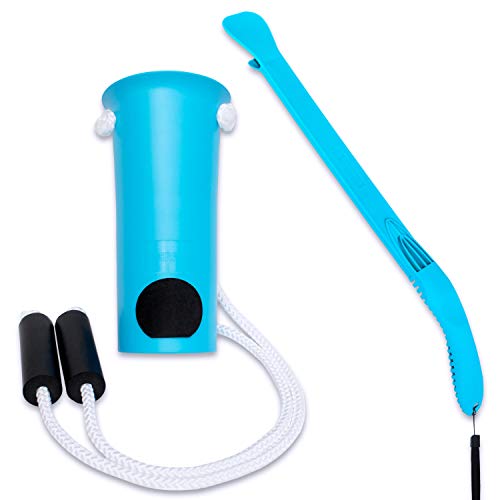
- Includes aid and sock remover
- Flexible shell for weak hand strength
- Remover adds leverage
Best For: Putting on and taking off regular socks during recovery
Simple Pull-On Aid
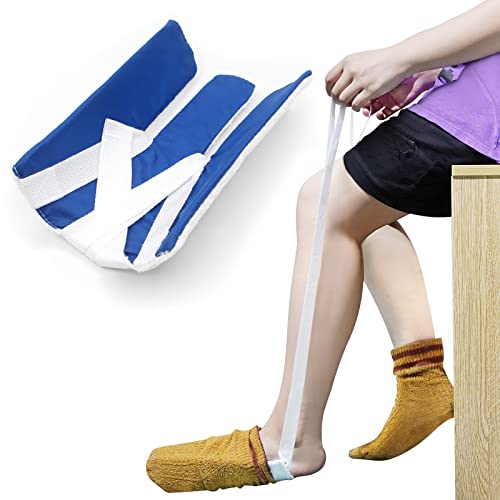
- Helps put on multiple everyday sock styles
- Reduces bending, twisting, and turning
- Terry cloth and nylon design weighs 2.4 ounces
Best For: Seniors and users seeking a lightweight aid for standard socks
Foam-Grip Comfort Pick
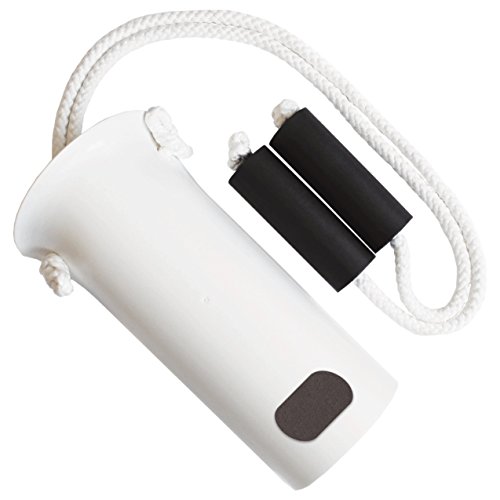
- Non-slip foam handles improve control
- Adjustable 33-inch cords personalize reach
- Lightweight and compact for travel or one-handed use
Best For: Users with weak grip or recovery-related mobility limits
Multi-Function Choice
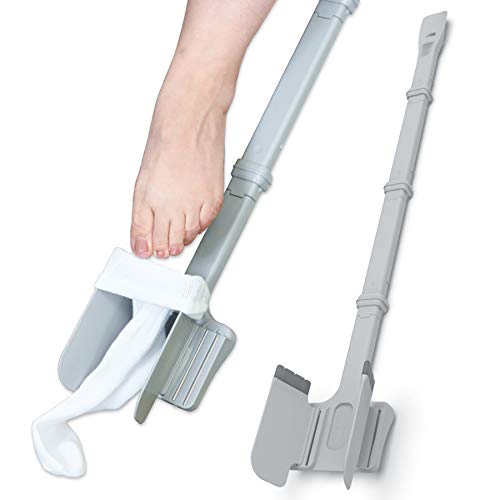
- Combines sock aid, shoe horn, and sock remover
- Adjusts for width and offers three reach lengths
- Open cradle supports one-handed, flat loading
Best For: Users wanting one adjustable tool for the full sock-and-shoe routine
Flexible Wide-Tube Pick

- 4-inch tube for regular socks and stockings
- 33-inch adjustable pull rope
- Foam helps keep socks in place
Best For: Seniors and users who need less bending for everyday socks
Hand-Strength-Friendly Choice

- Foam handles for easier gripping
- Long cords support seated use
- Designed for several sock types
Best For: Users with limited hand strength, arthritis, or post-surgery mobility needs
Simple Terry-Covered Classic
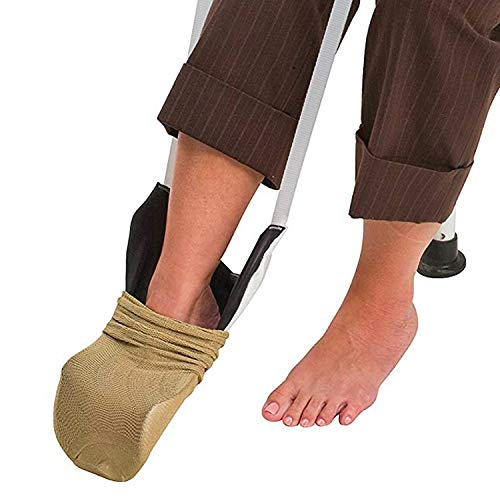
- Terry cover helps prevent slipping
- Nylon lining reduces friction
- Usable sitting or standing
Best For: Adults and seniors needing a basic no-bend sock helper
Best Flexible Shell – RMS Deluxe Sock Aid
For shoppers comparing sock aids for limited hand strength, the RMS Deluxe Sock Aid combines a flexible contoured shell with soft foam handles. It is designed for regular socks and can help users dress without bending down.
Best For: Adults who need a flexible sock aid for regular ankle, knee, calf-length, athletic, or dress socks and have foot widths of 5 inches or less.
Pros:
- Flexible contoured shell is designed for weak hand strength.
- Soft, non-slip foam handles provide a comfortable grip.
- Adjustable 38-inch ropes allow users to customize the length.
- Slip-resistant foam pad helps keep the sock in place.
Cons:
- Not intended for compression socks, sheer anklets, or other very thin hosiery.
- Designed for foot widths of 5 inches or less.
This is a practical choice when grip comfort and a flexible shell matter most. Its main limitation is compatibility with regular socks rather than compression or very thin hosiery.
Best Grip Comfort – Vive Sock Aid
The Vive Sock Aid is a straightforward option among sock aids for limited hand strength, with built-up foam handles and a wide slip-resistant cuff. Its contoured plastic shell is intended to help users put on socks or hosiery after surgery, injury, or reduced mobility.
Best For: Seniors and users recovering from surgery or injury who want padded handles and adjustable cords for putting on socks independently.
Pros:
- 3 cm foam padding on each handle supports a comfortable, secure grip.
- Contoured latex-free plastic shell slides over the foot and heel.
- Wide slip-resistant cuff helps prevent the sock from sliding off.
- Button adjustors make the 33-inch cords easier to customize.
Cons:
- The supplied notes do not specify compatibility with particular sock thicknesses or foot widths.
- Hand-wash care is required.
Choose this model if padded handles and a slip-resistant cuff are priorities. The included 60-day Vive guarantee adds a defined support window, while fit details are less specific than some alternatives.
Best Wide Opening – 3.93-Inch Sock Aid
For people comparing sock aids for limited hand strength, this wide-opening dressing aid uses a contoured shell, non-slip foam pad, and adjustable cords to reduce bending and reaching. It is intended for regular socks and foot widths of about 4.2 inches or less.
Best For: Seniors, pregnant users, post-surgery users, and others with limited mobility who need a wide, sturdy aid for everyday socks.
Pros:
- Approximate 4.2-inch opening accommodates many foot sizes within its stated limit.
- Extended lip and non-slip foam pad help keep socks from slipping.
- Soft foam handles and 38-inch adjustable ropes support easier use.
- Smooth-edged plastic shell is designed to slide socks on without tearing.
Cons:
- Not recommended for tight compression socks or extremely thick stockings.
- Best suited to foot widths of 4.2 inches or less.
This model emphasizes a wide, sturdy design and smooth edges, making it useful for regular daily socks. Check the stated foot-width limit and avoid pairing it with compression or very thick stockings.
Best Complete Kit – RMS Sock Aid Kit
The RMS Sock Aid Kit stands out among sock aids for limited hand strength because it includes both a flexible sock aid and a separate sock or stocking remover. Together, the two pieces address putting on and taking off regular socks for users with limited mobility or reduced arm strength.
Best For: Users who want a two-piece dressing aid for regular socks, especially during recovery from back, knee, or hip replacement surgery, with foot widths of 5 inches or less.
Pros:
- Includes both a deluxe sock aid and a sock or stocking remover.
- Flexible shell is designed for users with weak hand strength.
- Remover design maximizes leverage for limited arm strength.
- Smooth, flexible pieces help socks slide on and off without snagging.
Cons:
- Not intended for compression socks or compression stockings.
- Designed for regular socks and foot widths of 5 inches or less.
This is the most versatile choice in the group if removing socks is as important as putting them on. Its regular-sock limitation remains important, but the included doffer adds useful functionality for recovery and daily dressing.
Simple Pull-On Aid – Everyday Sock Helper
For shoppers comparing sock aids for limited hand strength, this lightweight helper focuses on straightforward sock application with minimal bending, twisting, or turning. Its terry-cloth and nylon construction is designed to hold the sock while reducing friction as you pull it into place.
Best For: Seniors, people with limited mobility, and anyone who needs help putting on everyday socks without bending over.
Pros:
- Supports putting on ankle, knee, calf-length, athletic, trouser, and other flat socks.
- Designed for easy on-and-off use with little effort.
- Terry cloth helps hold the sock while the nylon side reduces friction.
- Lightweight at 2.4 ounces.
Cons:
- The notes do not specify adjustable sizing or cord length.
- The notes do not indicate that it is intended for compression socks.
This is a practical, lightweight option when the priority is reducing bending and making standard sock dressing easier. Those needing more grip customization or a multi-function design may prefer another style.
Foam-Grip Comfort Pick – Deluxe Sock Aid
This deluxe sock aid is a strong candidate for people comparing sock aids for limited hand strength because its non-slip foam handles provide extra control and leverage. The contoured shell and adjustable cords also make it easier to tailor the dressing motion to the user.
Best For: Seniors, people with weak grip or limited mobility, and users recovering from hip, knee, or back procedures.
Pros:
- Foam handles offer a comfortable, non-slip grip.
- Adjustable 33-inch cords can be retied for a personalized reach.
- Flexible, contoured ABS shell is latex-free and designed to glide socks on.
- Compact, lightweight design supports one-handed use and travel.
Cons:
- The cord requires manual adjustment and retying.
- The supplied notes do not specify compatibility with compression socks.
Choose this model when handle comfort and customizable reach matter as much as avoiding a deep bend. Its portable form is useful for home, clinic, or travel, though users should confirm that its shell style suits their preferred socks.
Multi-Function Choice – Adjustable Sock Ox
Among sock aids for limited hand strength, the Easy Sock Ox stands out for handling more than sock application. Its open cradle loads flat for one-handed use, while adjustable width and length help accommodate different feet, reach positions, and dressing locations.
Best For: Users who want one tool for putting on socks, removing them, and using a long-handle shoe horn without bending.
Pros:
- Combines a sock aid, long-handle shoe horn, and sock remover.
- Adjustable width and three length options support different feet and reach needs.
- Open cradle loads flat without requiring a sock to be stretched over a closed tube.
- One-handed operation, tool-free assembly, and pack-flat extensions improve convenience.
Cons:
- Not intended for compression socks.
- At 13.12 ounces, it is heavier than the other listed aids.
- Its multi-piece adjustable design may require more setup than a basic puller.
This is the most versatile option for users who also need help taking socks off or putting on shoes. The adjustable, packable design adds flexibility, while the stated limitation for compression socks narrows its ideal use.
Flexible Wide-Tube Pick – Jellas Sock Aid for Seniors
For shoppers comparing sock aids for limited hand strength, the Jellas Sock Aid offers a straightforward slide-and-pull design. Its 4-inch tube, foam grip, and 33-inch rope are intended to make regular socks and stockings easier to manage while reducing the need to bend.
Best For: Seniors and people with limited mobility, back issues, or difficulty bending who mainly wear regular socks or stockings.
Pros:
- Wide 4-inch tube accommodates feet up to the stated size limits.
- Anti-slip foam helps hold socks in place during fitting.
- 33-inch rope can be shortened with knots and helps reduce bending.
- Can be assembled with or without reinforcing nails for more flexible storage.
Cons:
- Not described as the best choice for compression socks.
- Arm injuries may affect the user experience.
- The reinforced assembly can be difficult to remove without tools.
This is a practical option when a wider opening and adjustable rope length matter more than compression-sock compatibility. The slide-on process is simple, but users should confirm that their foot and sock sizes fit the stated specifications.
Hand-Strength-Friendly Choice – Soft ABS Sock Aid Device
This sock aid for limited hand strength combines foam handles with a long pull cord, so users can control the device while seated without leaning forward. The soft flexible ABS shell has a 4-inch opening and is designed for several sock types, including compression, thermal, and diabetic socks.
Best For: Seniors, people with arthritis or limited hand strength, and post-surgery users who want to put on socks without bending.
Pros:
- Thick foam handles are intended to be easier to hold with limited hand strength or arthritis.
- Long pull cords support seated use with less stretching or leaning.
- 4-inch opening is designed for thin, thick, compression, and diabetic socks.
- Rounded ABS edges are designed to reduce scratching and snagging.
Cons:
- The notes do not provide a specific maximum foot length.
- Users still need enough control to operate the pull cords.
- Only one device is listed in the package details.
Among these options, this model most directly addresses reduced gripping ability because of its foam handles. Its broad sock compatibility also makes it a versatile choice, provided the user can comfortably manage the cords.
Simple Terry-Covered Classic – DMI Deluxe Sock Aid
The DMI Deluxe Sock Aid is a simple no-bend helper for shoppers seeking sock aids for limited hand strength and reduced range of motion. Its terry cloth cover helps hold a sock in place, while the nylon lining is intended to reduce friction during use.
Best For: Adults and seniors recovering from hip, knee, or back surgery or managing limited range of motion with standard socks.
Pros:
- Allows socks or stockings to be pulled on without bending.
- Can be used sitting or standing.
- Terry cloth cover helps prevent sock slipping.
- Nylon lining is designed to reduce friction.
Cons:
- Care requires hand washing with mild detergent and air drying.
- The supplied notes do not specify a wide opening, long cord, or compression-sock compatibility.
- It may offer less grip support than models with foam handles.
This DMI model favors a familiar, fabric-covered design over specialized handle features. It is worth considering for straightforward no-bend dressing, especially if easy-care instructions and a one-year warranty are useful to you.
How We Picked the Best Sock Aids for Limited Hand Strength
We focused on features that matter most when hand strength, flexibility, or balance is reduced: secure sock loading, low-effort pulling, comfortable grips, stable construction, and compatibility with common sock types. We also considered whether each design supports independent use without requiring deep bending or precise finger control.
Because needs vary, the selection includes traditional rigid sliders, wider models for easier loading, adjustable aids, foam-handled designs, and options that include a sock remover. Product descriptions and stated dimensions should be checked carefully before purchase, especially if the user wears thick socks or compression garments.
Quick Comparison
| Feature | Best For | What to Check |
|---|---|---|
| Foam handles | Reduced grip strength | Handle length and comfort |
| Wide shell | Easier sock loading | Fit for sock opening and foot size |
| Adjustable design | Different users or sock types | Adjustment range and stability |
| Sock remover | Limited bending or pulling ability | Whether removal works with the user’s footwear |
Key Buying Factors for Sock Aids for Limited Hand Strength
Grip and Handle Design
Look for large, padded, or foam-covered handles that are easier to hold than thin cords. Longer handles can reduce bending, but they may also require more room to maneuver. A loop or cord should be easy to pull without demanding a tight pinch grip.
Shell Width and Sock Compatibility
A wider shell may be simpler to load when finger dexterity is limited. However, the sock must stretch securely over the shell without slipping off prematurely. Check whether the aid is intended for regular, ankle, crew, thick, or compression socks.
Stability and Material
Rigid plastic or ABS shells generally hold their shape during loading, while flexible designs may feel more comfortable but require more control. Slip-resistant surfaces can help keep the sock in place, but they should not snag delicate fabrics.
Ease of Cleaning and Storage
Choose a straightforward design that can be wiped clean and stored without tangling. If the aid is for daily use, simple loading and consistent release are more valuable than unnecessary accessories.
Who Should Buy Which Sock Aids for Limited Hand Strength?
Choose a foam-handle model if gripping and pulling are the main challenges. A wide 4-inch-style aid may suit users who find narrow openings difficult to load. Adjustable models are useful for households sharing the device or for people who switch between thinner and thicker socks.
If bending is especially difficult, prioritize a longer handle and consider a set with a sock remover. For basic daily use with standard socks, a simple rigid slider may be the easiest and most affordable choice. Users wearing compression socks should confirm that the product is designed for that level of resistance; many standard sock aids are intended only for regular socks.